
Material Culture

Understanding the language of stone.

Marble is time and pressure turned to stone. Here is what we think is worth knowing to understand it, choose it well and live with it for a long time.

01

Formation

Marble is a metamorphic rock, formed when limestone rich in calcite or dolomite recrystallises under great heat and pressure deep within the earth's crust. The transformation tightens the stone's crystal structure and gives its surface a depth that seems to hold the light.

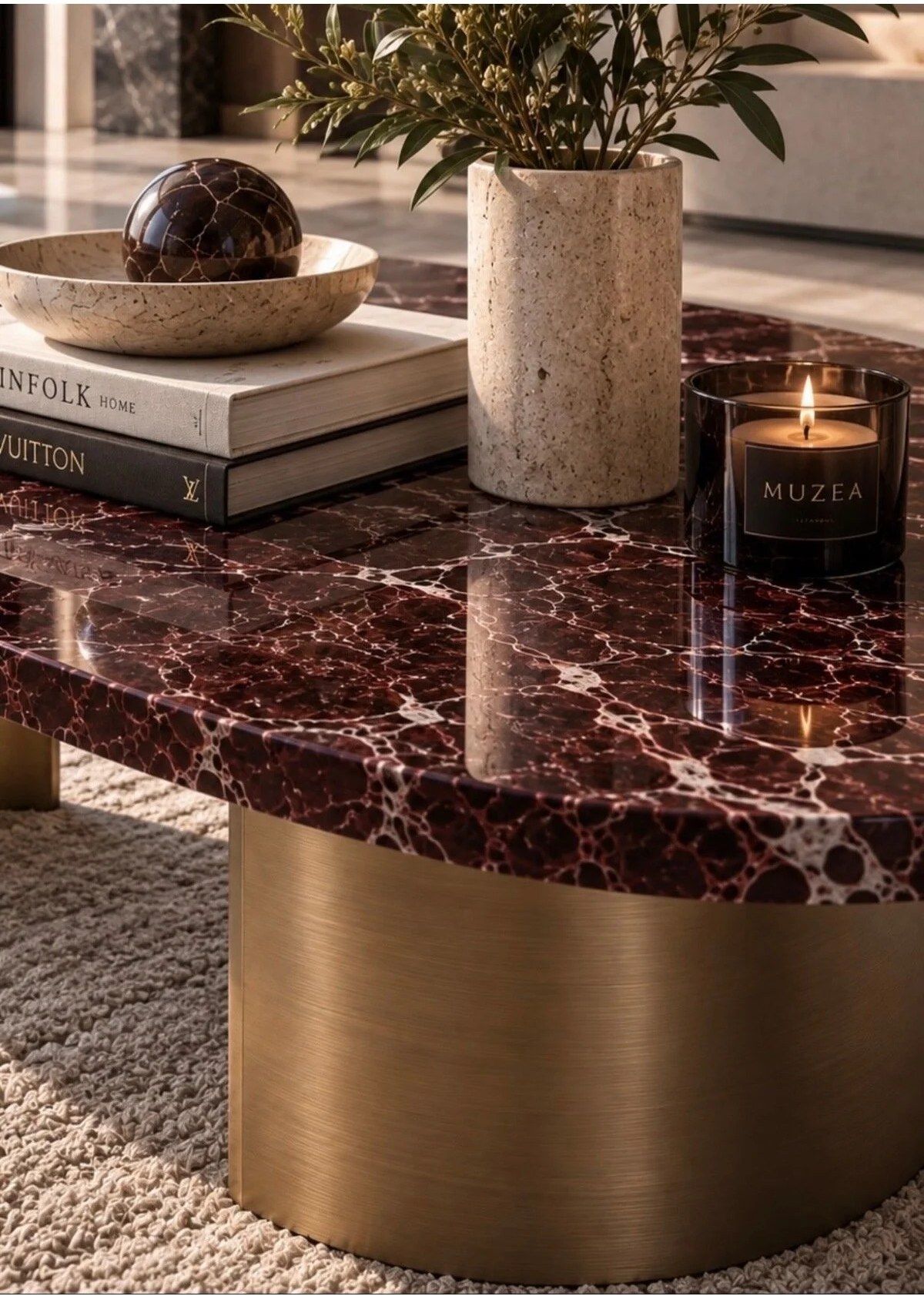
Veins are the traces of minerals drawn into the stone as it crystallised, and it is this mineral make-up that sets the colour: iron oxides bring reds and burgundies, graphite and organic matter greys and blacks, pure calcite white. Every movement of a vein is a composition the stone arrived at under its own conditions.

Anatolia is one of the richest marble regions in the world. That range, from the deep burgundy of Elazığ Cherry to the pale stones of the Aegean, is the foundation of MUZEA's material palette.

02

Choosing Stone and Finish

Tone and atmosphere
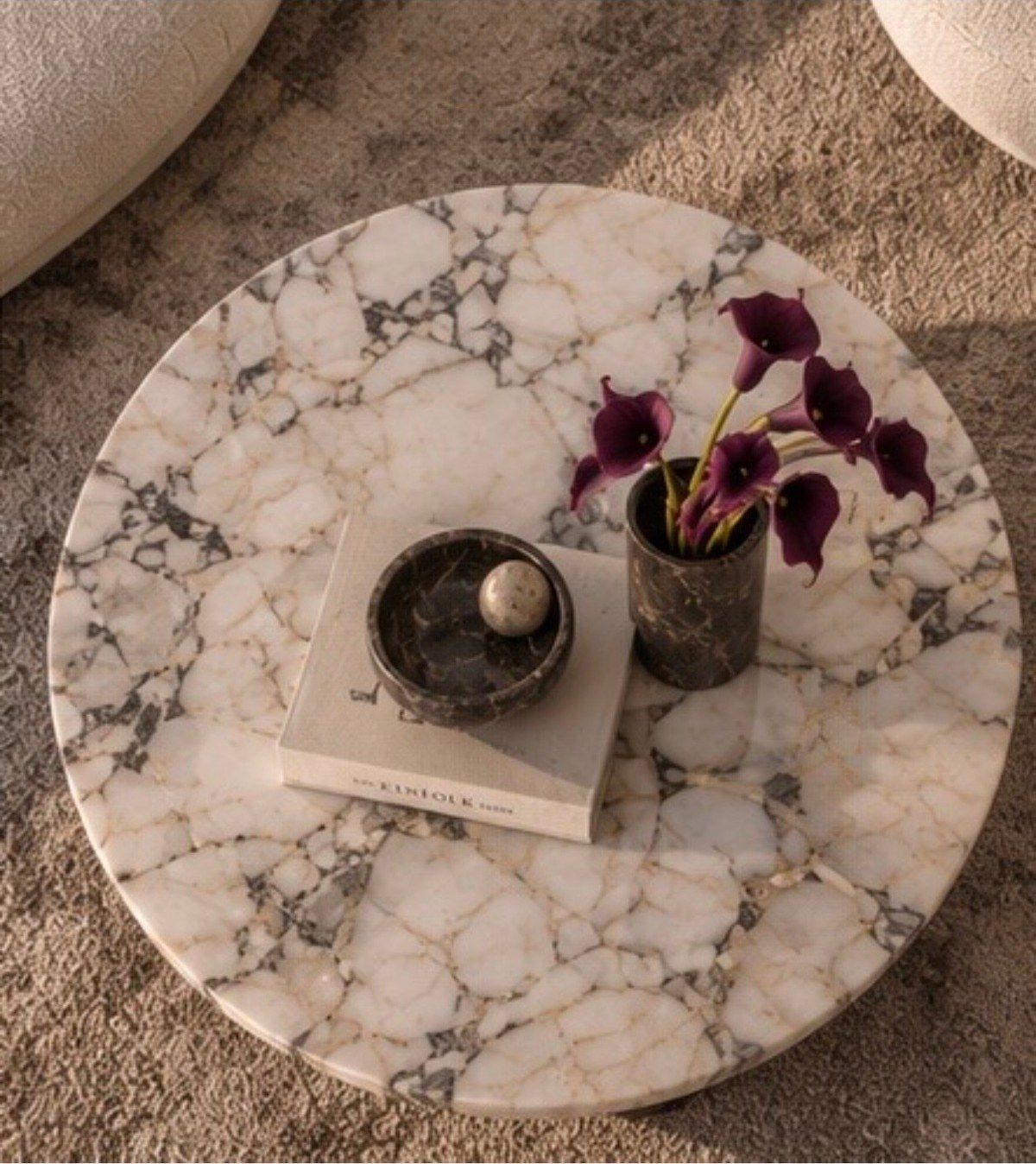
Pale stones reflect light and open a room up; dark and burgundy tones bring contrast and depth. We suggest choosing with the room's light and its other surfaces in mind.
Composition of the vein
Dense, moving veins make the top the focal point of a room; quiet, scattered veining sits calmly within the architecture. On rectangular tops, the direction of the vein is considered together with the long axis of the table.
Finish
A polished finish deepens colour and veining and, with its tighter pores, resists staining better, though etch marks from acidic spills show more clearly. A honed, matte finish has a silken feel and shows marks of use less, but asks for more regular sealing.
Size and placement
For a comfortable table, allow about 60 cm of edge per person and at least 90 cm between the table and walls or other furniture. A coffee table sits in balance when its height is close to, or a few centimetres below, the seat height.
Natural variation
Every block is its own; the tone and veining of your top will differ from the images. If you wish, you can ask for details and images of your stone before ordering.
03

Daily Care

Cleaning
Wipe the surface with a soft microfibre cloth dampened with warm water, then dry it with a clean cloth. When needed, use a pH-neutral cleaner made for natural stone.
Spills
Deal with spills straight away, blotting with absorbent paper rather than wiping, which spreads them. Act quickly with anything acidic or coloured: lemon, vinegar, wine, coffee, fruit juice, tomato sauce.
Everyday protection
Use coasters under glasses, cups and bottles, and trivets under hot dishes. Put felt pads under decorative objects, and never drag heavy or hard items across the surface.
04

Sealing and Periodic Care

Sealing
An impregnating sealer made for natural stone slows liquids from entering the pores and lowers the risk of staining. Depending on use, we suggest renewing it every 6 to 12 months on dining tables and once a year on coffee tables.
The water test
To see whether the sealer needs renewing, leave a few drops of water on the surface. If they soak in within a few minutes and leave a dark mark, it is time to reseal.
Professional restoration
Dullness and fine scratches that build up over the years can be removed by a professional stone restorer, honing and polishing the surface back to how it first looked.
05

Stains and Etching

Stains
Oil, coffee or wine can work into the pores and change the colour of the stone. Fresh stains usually lift with a pH-neutral cleaner; for set stains, seek professional help.
Etching
Acids react with the calcite in marble and leave dull marks on the surface. This is not a stain but wear to the surface, and it is removed by professional polishing.
Ask us
If an unexpected mark appears, contact us before treating it yourself, and we will work out the right approach together.
06

What to Avoid

  • Cleaners containing vinegar, lemon, ammonia or bleach
  • Cream or powder abrasives, the rough side of a sponge, steel wool
  • All-purpose kitchen and bathroom sprays, glass cleaners
  • Hot pans, irons or candles placed directly on the surface
  • Perfume, cosmetic and cologne bottles left without a coaster

Let us choose the stone together

We will help you find the stone and finish that suit your room's light, its use and its architecture.

Talk to Us on WhatsApp